 Charlie
How much of GenAI's capabilities are you leveraging today? For illustrative purposes, I reckon most people use only 1%. Imagine how much more impactful you will be if you can tap on 10%, or even 20% of what these external brains can already offer.
The problem does not lie in your learning to use these LLMs, say with better prompt or context engineering. The problem is in you merely using LLMs to automate or augment the things you presently do. Yes, you save time and effort with automation and produce better performance with augmentation. But compared to what it could be, these results are incremental at best.
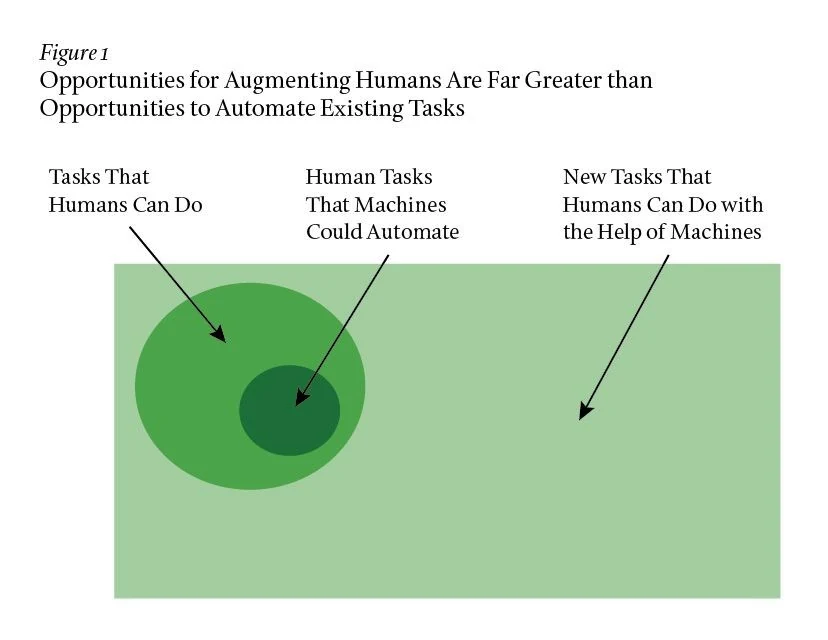
While there is plenty of job anxiety over how AI can automate many of the tasks we currently do, we should be challenging ourselves to do the endless higher order, higher value things with GenAI that we alone couldn't previously.
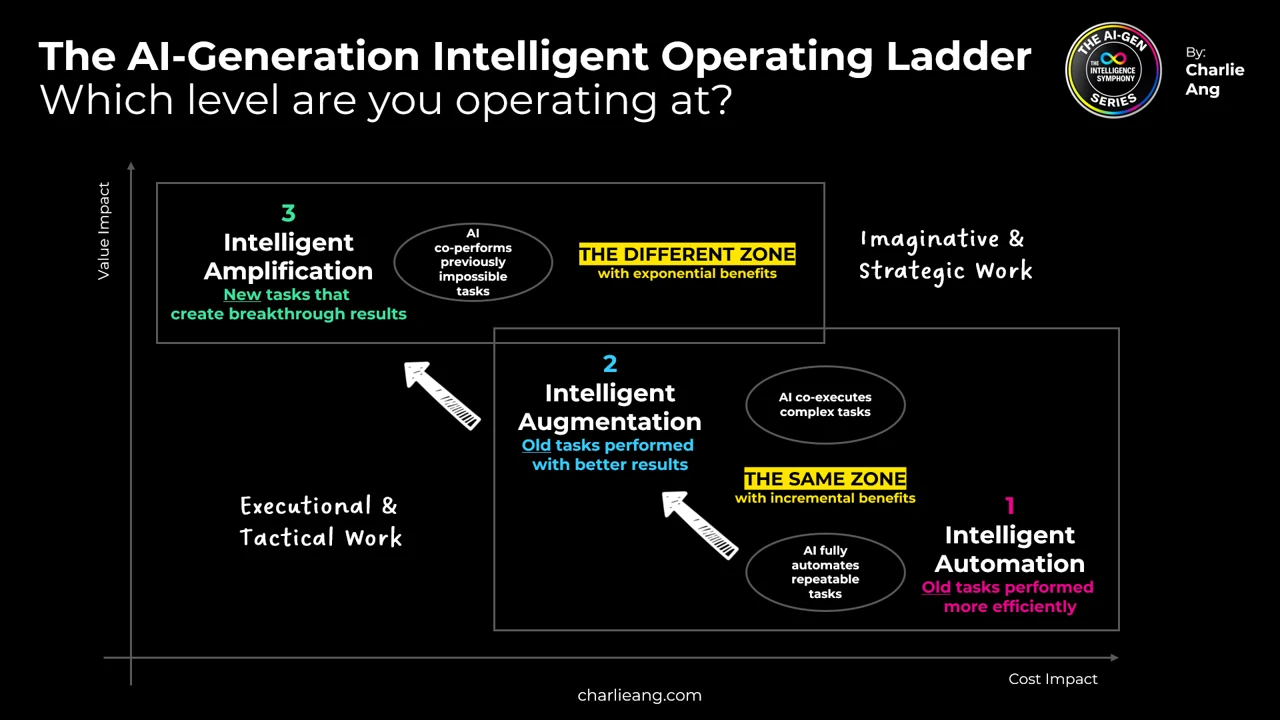
Doing the old stuff can only yield efficiency improvements, while doing previously impossible tasks could yield exponential impact. From value-adding to value-multiplication, with GenAI as the force multiplier.
This shift from using GenAI for executional and tactical work to imaginative and strategic work will be game-changing for your team and you.
What the new things are is left to our respective imaginations. Today, we are no longer competing at the level of our knowledge or intelligence but of our imagination. The earlier you are awakened to this workplace reality, the more it will be your early bird advantage.
Today, we are no longer competing at the level of our knowledge or intelligence but of our imagination.
Charlie AngThat's why my brand motto is "Human Imagination X Digital Intelligence = Exponential Impact".
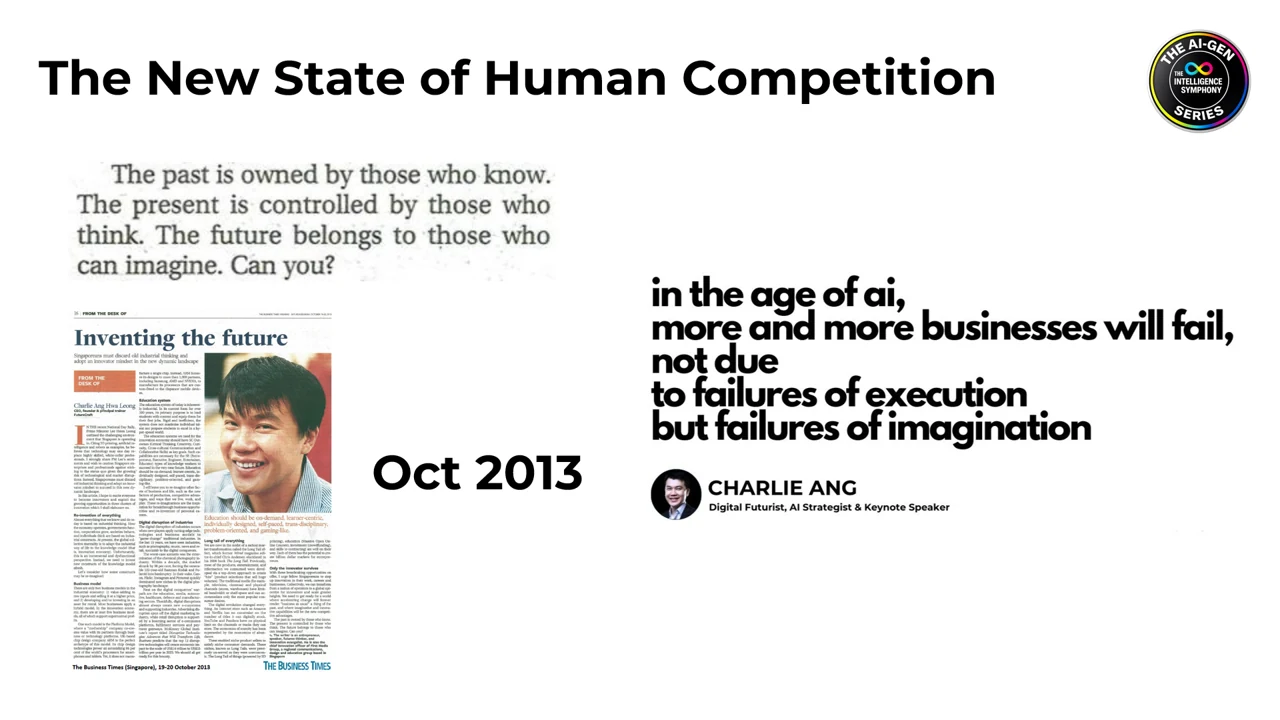
That's why I wrote in a national newspaper in 2013 that "The past was owned by those who know. The present is controlled by those who think. The future belongs to those who can imagine."
Imaginative and strategic work
Imaginative and strategic work is not fluff. It is serious value-multiplication stuff. For instance:
- Discovering un- and underserved customer needs
- Developing new products, solutions and services to serve these needs
- Re-purposing existing offerings to serve new and hidden customer segments
- Improving value proposition to increase consumer value
- Enhancing strategy to outplay competitors and peers
- Re-organizing systems, resources, teams and workflows for superior benefits, performance and efficiency
- Creating better creative messaging and storytelling to relate to customers
for an AI-rich operating environment.
If you think this is only for front-facing functions, you are dead wrong. We all serve customers, whether internal or external. That means we should all be doing it. This is the way to elevate our respective professional value in the new marketplace that is intelligence abundant.
The Intelligent Learning Ladder
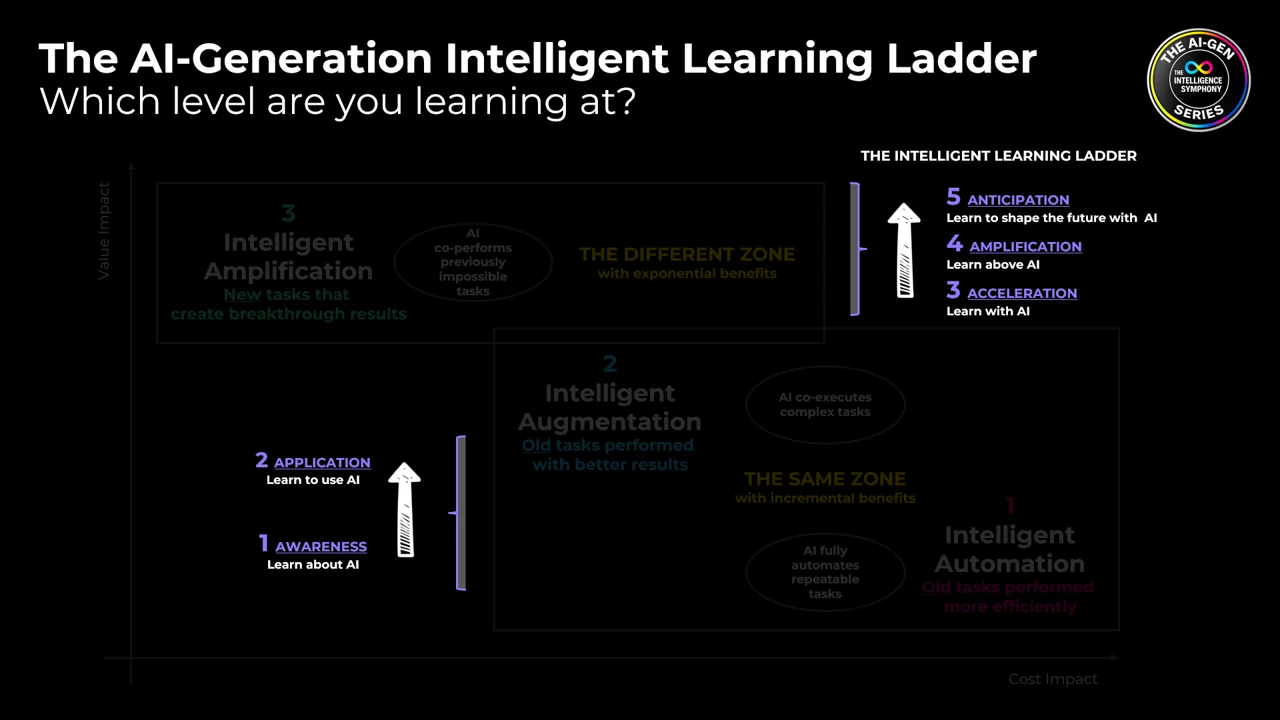
Climbing the Intelligent Operating Ladder should not be a standalone affair. The Intelligent Learning Ladder is the parallel upskilling ladder. To paraphrase Confucius, learning without doing is useless and doing without learning is dangerous. Hence, both activities should be in lock-step.
If you are playing a bigger game, you will need a bigger skill set. To accelerate this climb, you should upskill beyond AI Literacy (1-Awareness, 2-Application) to AI Leadership (3-Learn with AI, 4-Learn Above AI, 5-Learn to Shape the Future with AI).
That's why I created The Intelligent Reinvention Series™ for leaders and professionals to rise above AI and create exponential impact with AI.
"If capital in the form of AI can perform more tasks, those with unique assets, talents, or skills that are not easily replaced with technology stand to benefit disproportionately."
The Turing Trap: The Promise & Peril of Human-Like Artificial Intelligence, Erik Brynjolfsson, Stanford Digital Economy LabWhat unique assets, talent or skills are you developing, as AI increasingly duplicates your existing ones?
Originally published in Charlie Ang's Intelligent Reinvention Memo newsletter on LinkedIn (Issue 45).

Charlie Ang is an Intelligent Reinvention Strategist, corporate futurist and AI keynote speaker based in Singapore and speaking worldwide. He helps organisations and leaders reinvent, rewire and retool for the Age of Intelligence, and has been featured by the BBC, Financial Times, National Geographic and CNA.