 Charlie
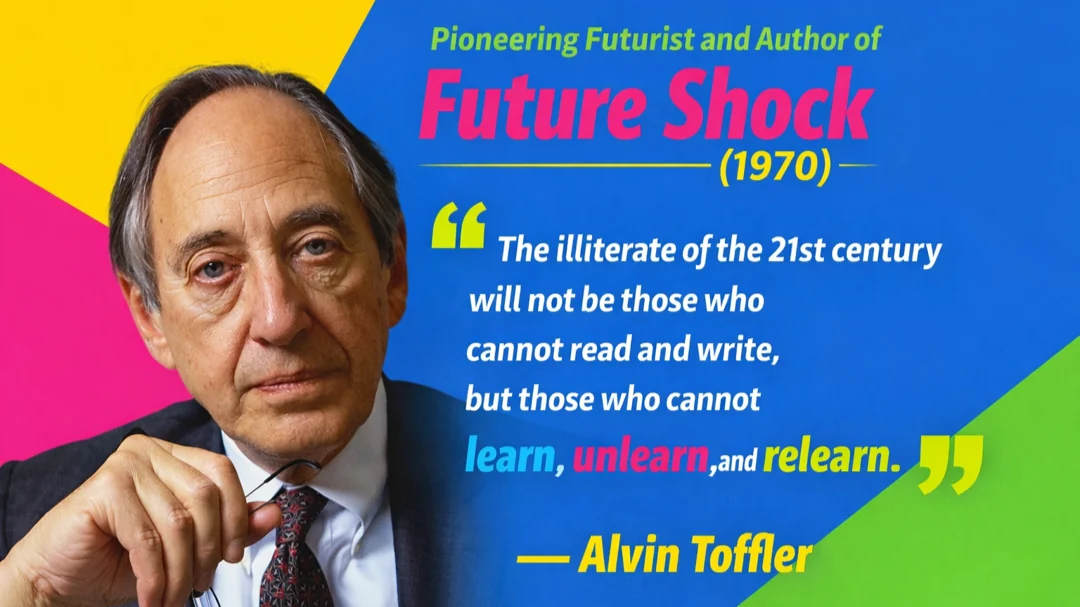
“The illiterate of the 21st century will not be those who cannot read and write, but those who cannot learn, unlearn, and relearn.”
Alvin Toffler (1928-2016)Many of us have heard Alvin Toffler's famous quote so often that it has become an axiom. Yet, the "why" and "how" of unlearning and relearning have remained somewhat enigmatic.
If we do not know the "why", then our motivation will be weak. If we know the "why" and not "how", then our implementation will be poor.
In this article, I will demystify both, in the specific context and circumstance of the age of intelligence abundance.
Why Unlearn and Relearn
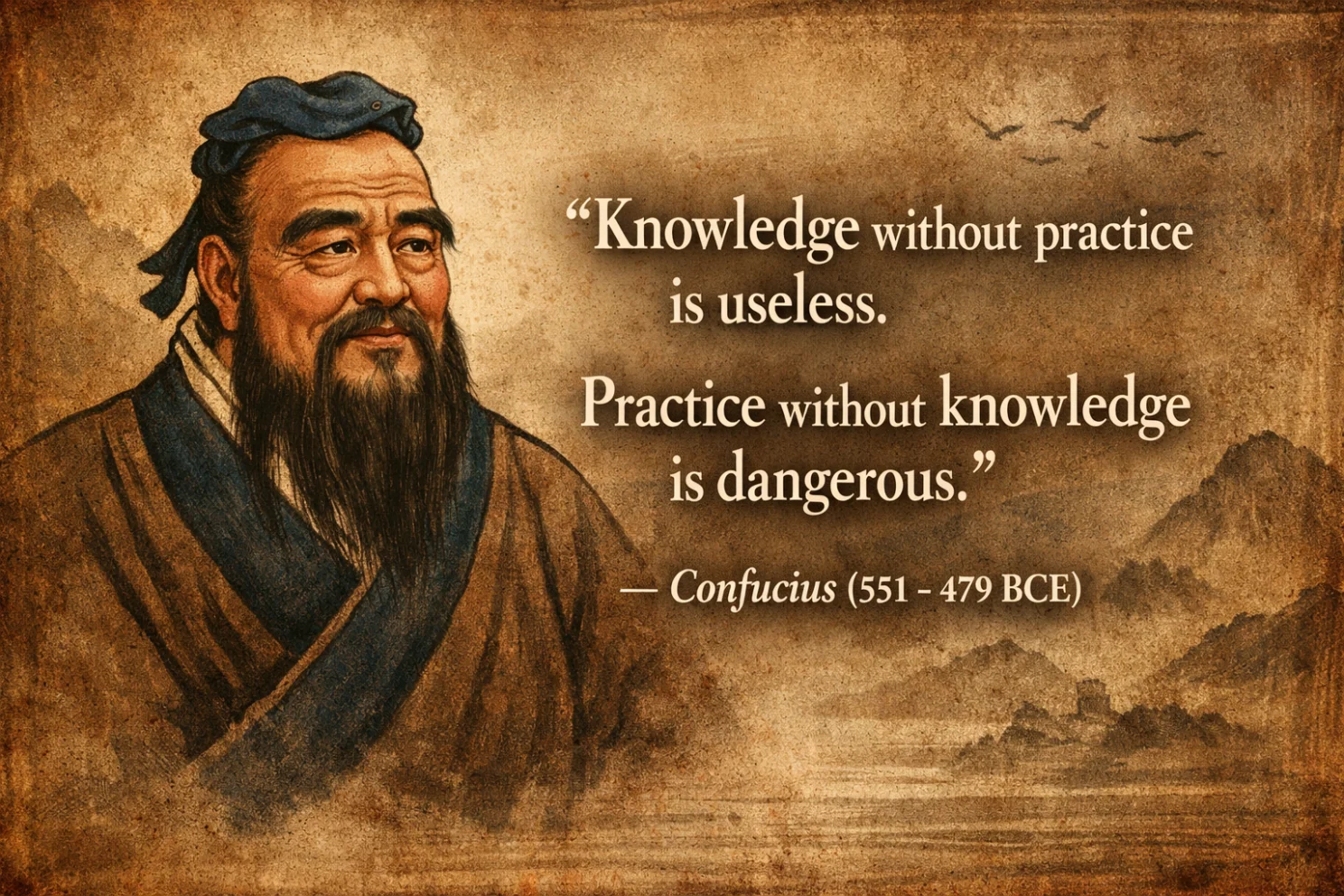
Here, Confucius' wisdom is instructive. Ideally, we should apply Knowledge to Practice.
While "Practice without knowledge is dangerous", I like to add that "Practice with expired knowledge is reckless". It is blindly following what has worked in the past but is becoming less applicable and valid moving forward. I call it reckless because it is used mindlessly and without questioning its continued relevance.
Why might a unit of knowledge lose its relevance?
Three key reasons are:
- New science and research invalidating the old: I grew up on the thesis that we should only consume up to 2 eggs per day and 5 per week. Since 2015, the latest consensus has shifted to new range limits of between 3-4 a day and 7-14 a week (individual health profiles and balanced diet apply). Limits are raised due to better scientific understanding of the body's ability to regulate blood cholesterol production, according to cholesterol consumption. Similarly, Charles Darwin replaced fixed species theory with evolution by natural selection, Galileo Galilei invalidated Aristotelian cosmology with heliocentrism and Albert Einstein countered absolute space and time with the theory of relativity.
- Next generation competitive strategies superseding the incumbents: An emergent strategy first becomes a dominant strategy, and eventually, a standard strategy. In a dog-eat-dog world, a new differentiated strategy will emerge to overpower the now standard strategy. The cycle repeats in perpetuity. As a case in point, value chain economics used to be the top dog in town. Until it (now retrospectively called pipeline economics) was overtaken by the platform economics, with the rise of tech platforms, such as Google, Amazon, Facebook and Netflix.
- Step-change environmental conditions creating new paradigms: The dawn of the Industrial Revolution rewrote the biggest assumption of production at that point in human history. That productive capacity is limited by biology, costing the keeps of humans and beasts of burden. The advent of machine power and electricity transcended the constraints of manpower and horsepower. Modern organizational models, workforce structures, construction engineering and production techniques, along with new industries, were born out of this single step-change. Field after field was re-invented and what was scarce trended towards abundance.
Today, with artificial intelligence, we are at it again. Like in the scientific, industrial and digital revolutions, all three conditions are ripening. We are again rewriting the biggest assumption of production at this point in human history. That cognitive capacity is limited by biology, costing the salary of a knowledge worker. Field after field will be re-invented and what is scarce will trend towards abundance. The clock-speed and industrial-scale in advancing and invalidating existing knowledge this time is unprecedented.
"We’ve just reached the point where we’ve predicted the structure of nearly every protein known to science. It’s a huge milestone... basically doubling the world's biological knowledge in one go."
Demis Hassabis, CEO, Google DeepMind (2022)At this volume and rate of knowledge expansion, the half-life of knowledge and skills shortens faster than ever.
How to Unlearn and Relearn
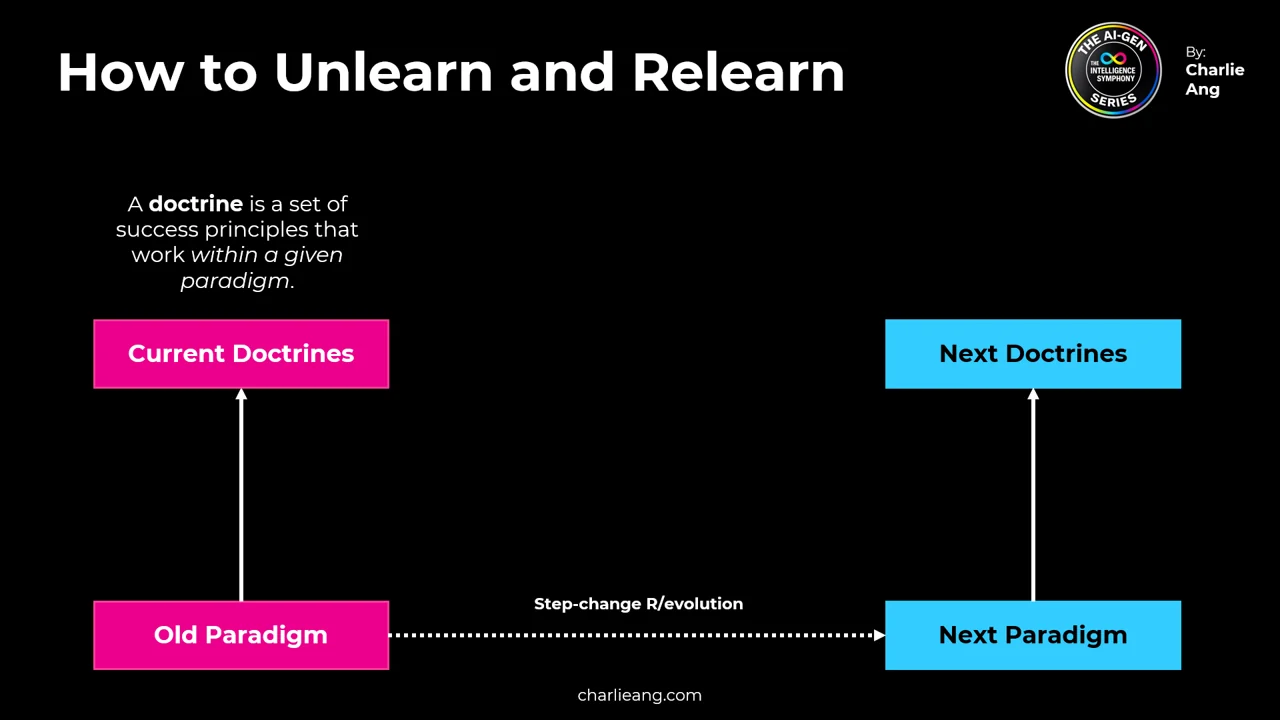
Human societies develop new doctrines to maximize the underlying paradigm over time.
In the Age of Discovery, oceanic shipping and gunpowder weaponry combined into a new maritime paradigm of global force projection. It was a step-change revolution, no less.
From it, new doctrines emerged. The Spanish pioneered the transcontinental naval empire. Portugal integrated ocean-shipped slavery with plantation economies. The Dutch invented the joint-stock company that fused finance with maritime power. The British industrialized colonial mercantilism at a global scale. Together, they spread across the world, with the might of "Glory, Gold and God".
The previous superpowers were land-based. Most notably, the Ottoman Middle Eastern, Qing Chinese, Mughal Indian empires were slow to adapt and fell by the wayside. Slow to unlearn and relearn the rules of power, warfare and commerce. The operating assumptions of land transportation as the most economical and kinetic weapons as the most lethal were no more.
On the other hand, the Japanese were quick to adapt, unlearn and relearn. The Meiji Restoration of 1868 dismantled the feudal order, abolished samurai privilege, centralized political authority, and rebuilt the state as a modern industrial nation. Soon, they rose to become the most powerful nation in Asia.
This story is the story of the rise and fall of civilizations. And in the age of Darwinian capitalism, the rise and fall of companies and careers, with every succeeding paradigm.
AI is igniting the biggest paradigm shift since electricity. Many of today's successful doctrines will decay into tomorrow's stale dogma. Not necessarily in a sudden big bang. But, cut by cut and day by day.
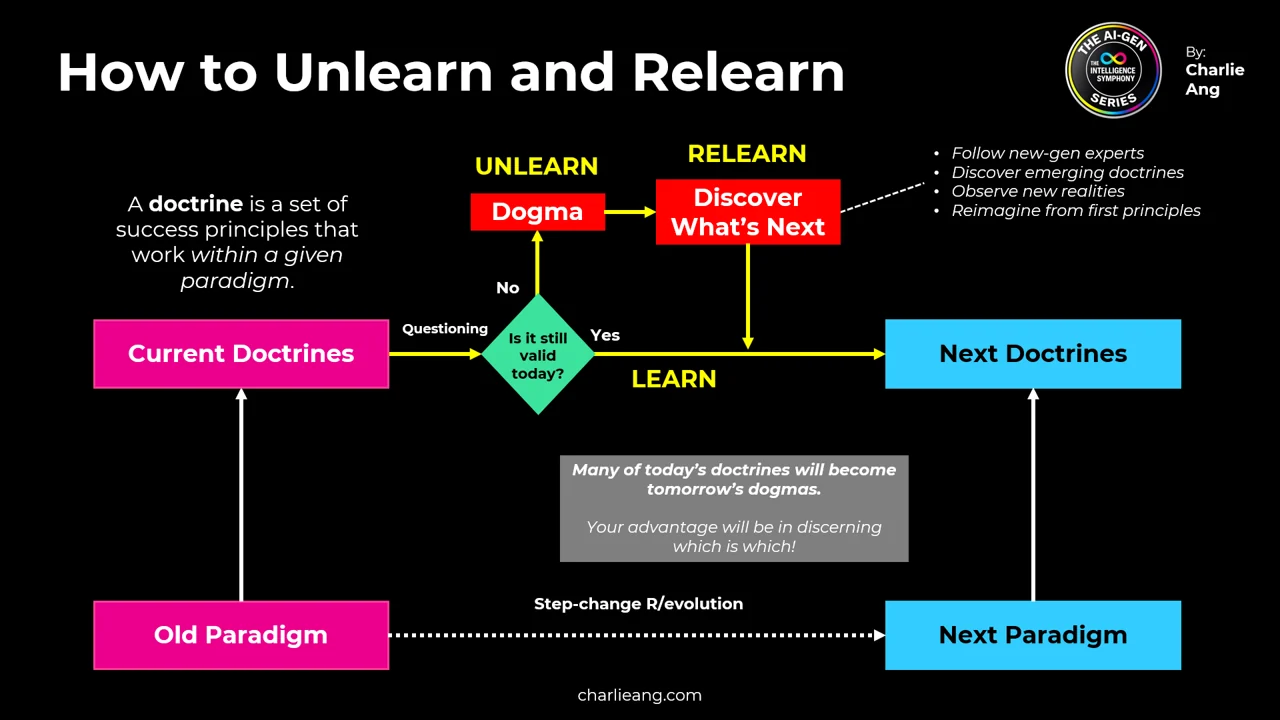
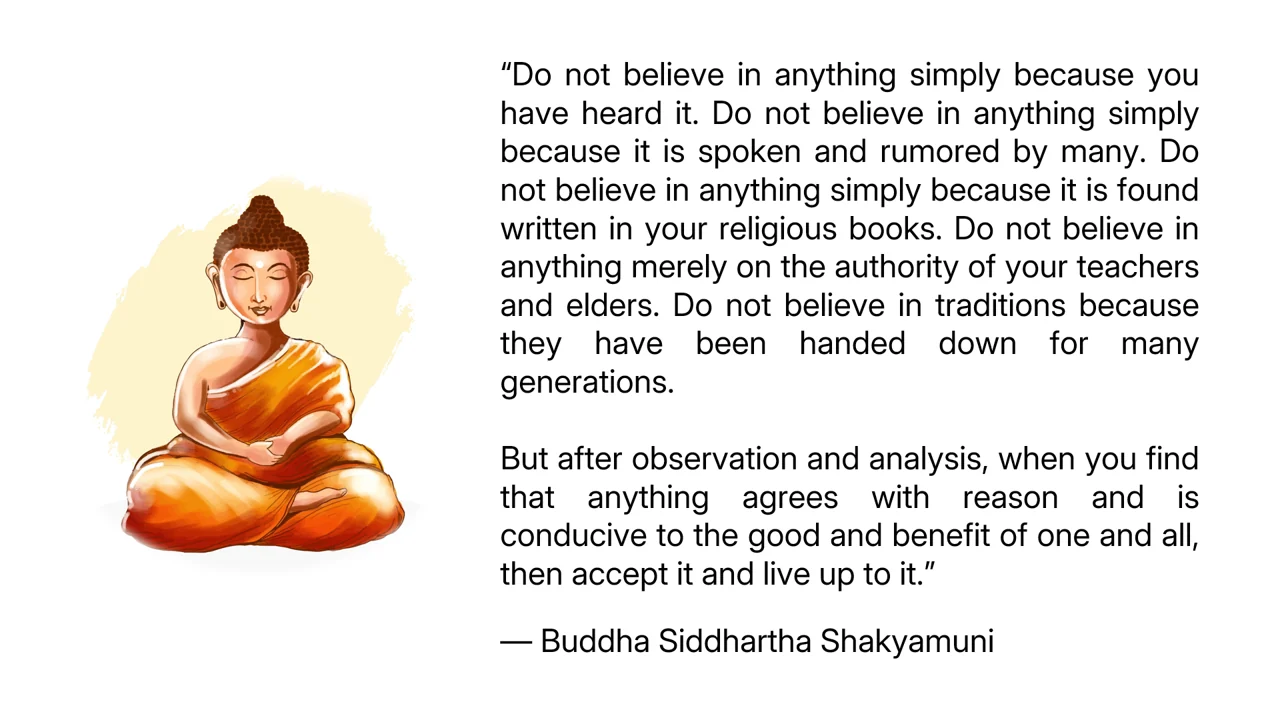
Instead of learning or applying blindly, we need to consciously use a Questioning filter to discern if the knowledge unit is still valid and useful today. If not, unlearn the old dogma and relearn the new doctrine.
This single and simple heuristic can be our competitive advantage in the marketplace and our defense against irrelevance in the AI era.
The wise, evergreen words of another great sage spoken 2,500 years ago are an excellent inspiration.
Are you unlearning and relearning faster than your competitors and peers?
Originally published in Charlie Ang's Intelligent Reinvention Memo newsletter on LinkedIn (Issue 43).

Charlie Ang is an Intelligent Reinvention Strategist, corporate futurist and AI keynote speaker based in Singapore and speaking worldwide. He helps organisations and leaders reinvent, rewire and retool for the Age of Intelligence, and has been featured by the BBC, Financial Times, National Geographic and CNA.