 Charlie
While this is a long read, I promise you that it will be rewarding.
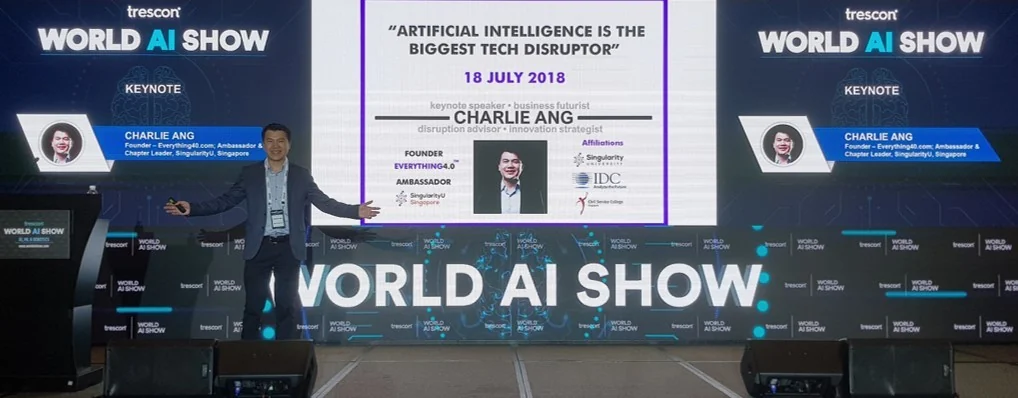
In 2018, when I keynoted at the World AI Show, the previous panel was asked: “What is the killer app of AI?” None of the panelists gave a convincing answer.
So when I took the stage, I answered it impromptu, without hesitation. I didn’t have to think twice because I had already been speaking about it for the past year.
Now, it’s time for me to do the big reveal to you.
How We Make Progress
Before diving into the answer, let’s start with the absolute basics.
Since humans evolved over millions of years, our logical brain developed to serve three key functions:
- Understanding the external world through cognitive interpretation of inputs from our five main senses. Let’s shorthand this as “content”.
- Anticipating our needs and appreciating our circumstances, or simply, “context”.
- Making decisions and taking action to make progress in our lives, or “decision” mode, in short. Decisions are made by matching the outer world realities with our inner world goals, content with context.
We repeat this decision-action loop thousands of times a day, mostly intuitively and sometimes deliberately. Cornell University estimates that we make around 35,000 decisions daily. Daniel Kahneman, in Thinking, Fast and Slow, categorized this as Type 1 (fast, intuitive) vs. Type 2 (slow, deliberate) thinking.
This loop does not follow a strict sequence: we jump between content, context, and decision modes repeatedly.
Making Progress in the Primitive, Analog, and Digital Ages
Picture a primitive human foraging in the wild.
She spots a bush with berries, notices tracks of a predator nearby and assesses “what animal might this be?” and “How far is the nearest protective cover?” (content).
She asks: “Am I hungry enough to take the risk?” (context).
Based on this, she either picks the berries quickly and leaves or moves on to find a safer food source (decision).
Now, imagine walking down an unfamiliar street in the late afternoon on your way to a musical show. You spot your favorite food chain (content) and instinctively ask yourself:
“Am I hungry enough for an early dinner?” “Do I have enough time to finish my meal before the show starts?” (context)
You think this through and make a judgment call (decision), either walking in or continuing on your way.
Next, visualize yourself shopping for reading glasses on Amazon.
You need a new pair because you sat on and broke your old one (context).
You enter a search query, scroll through dozens of options, and spend 20 minutes reviewing products (content).
Eventually, you give up on further reviews, even though better choices may exist, because of sheer overload.
You shortlist three options, reassess your needs (context), and make the final purchase (decision).
By the way, that was me yesterday.
Even in the digital era, this decision-action process remains unchanged and frozen in time. It is still time-consuming and mentally draining, even for such a mundane routine and trivial product.
With hundreds of conscious, Type 2 decisions to make daily, it starts to add up. This often results in cognitive overload: a state of mental exhaustion when the demands on our brain exceed its processing capacity. Given time constraints, we prioritize efficiency over effectiveness, thus making suboptimal decisions (like my incomplete review of glasses).
Making Progress in the Intelligence Age
For the first time in human history, this age-old process is about to be radically streamlined, thanks to AI.
The next generation of fully integrated Personal AI Assistants (PAIAs) will compress and transform how we make progress.
The operative word here is not AI; it is Personal.
One assistant that works exclusively for you and understands you intimately, if you allow it.
I once had a dedicated personal assistant at a previous job. I know firsthand how much time she saved, how many decisions she made on my behalf, and how she handled tasks end-to-end for me every day. The more she learned about my work and preferences, the more valuable she became.
Her salary? Around US$1,500 per month.
Now, this same level of personal assistance, costing $1,500, will soon be available to billions of people, for free.
PAIA’s time has finally come
Previous versions of PAIAs suffered from:
- Poor natural language comprehension
- Lack of real-world understanding
- Weak reasoning capabilities
- Inability to execute actions
Large Language Models solved the first three deficiencies at one go, leaving AI Agents as the final piece of the puzzle.
After a decade caught in the First-Gen Syndrome of being too early, the time for PAIAs will soon arrive.
The Killer App of AI
So why will PAIA be the killer app of AI? Because within five years, it will become the primary “Window to the World” for the majority of people: the main interface through which we access information and connect with the world.
Google, a child of the Web 1.0 phase, was the last universal Window. The rise of social media in Web 2.0 fragmented our attention across multiple platforms. Now, PAIA is poised to reclaim that role in the Web3 era.
PAIA will be “the one app to rule them all”.
Whoever wins the PAIA race will command the largest share of our attention and wallet, potentially becoming the first-ever US$10 trillion, or even US$20 trillion, market cap company. Taking a tiny toll on all our purchases would be more than enough.
It’s no surprise that the usual Big Tech giants are vying for this new throne. A handful of AI startups, notably OpenAI and Perplexity, may be quietly making their moves.
With LLMs, the playing field for “understanding the external world” (content) has somewhat leveled. However, Amazon, as the largest marketplace of products, has an upper hand and extra incentive here.
For understanding personal context, Google leads, thanks to its Android ecosystem, search intent data, and workspace consumer apps. Meta, with billions of daily interactions across WhatsApp, Facebook, and Instagram, is not far behind in capturing your context.
The final trump card will go to whoever solves the last mile first: decision-making and action-taking (“decision”) through Agentic AI.
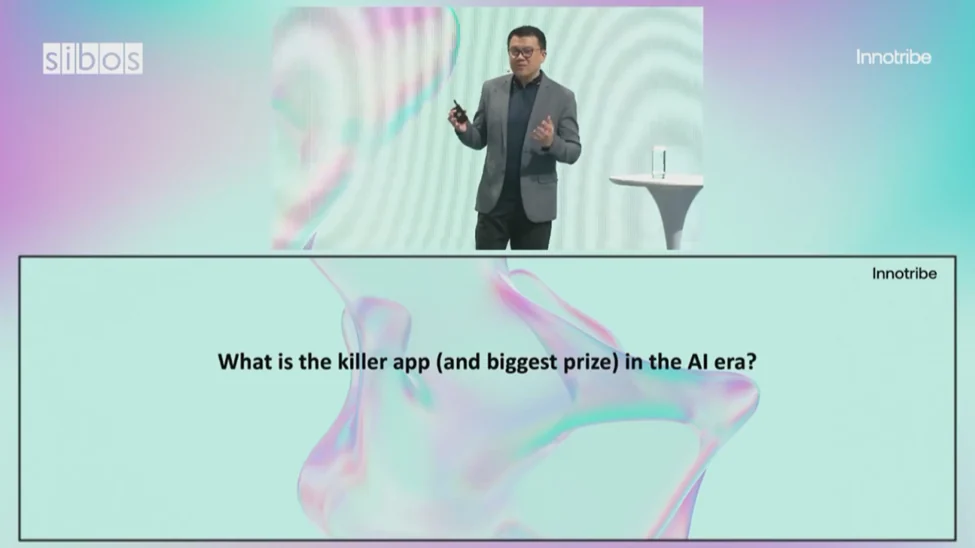
The impact of PAIAs won’t be limited to the Tech sector. They will redefine how we buy, what we buy, who we buy from, and even how much we pay. No consumer-facing industry will be spared because a huge chunk of market power and value capture will migrate away from consumer brands to Big Tech.
Ask yourself: What happens when billions of consumers trust their PAIAs more than they ever trusted your brand?
Back to Basics
PAIA will not be just another tool. It will not even be THE tool. Rather, it will be our trusted “cognitive half”, short-circuiting our decision-action loop hundreds of times a day.
The reward? Time saved, cognitive relief, and better decisions towards making progress in our lives.
Originally published in Charlie Ang's Intelligent Reinvention Memo newsletter on LinkedIn (Issue 6).

Charlie Ang is an Intelligent Reinvention Strategist, corporate futurist and AI keynote speaker based in Singapore and speaking worldwide. He helps organisations and leaders reinvent, rewire and retool for the Age of Intelligence, and has been featured by the BBC, Financial Times, National Geographic and CNA.