 Charlie
I have been using Listerine since I was a teenager and feeding my children Frosties since they were little. Suddenly, I stopped, for good. They have lost me as a customer forever.
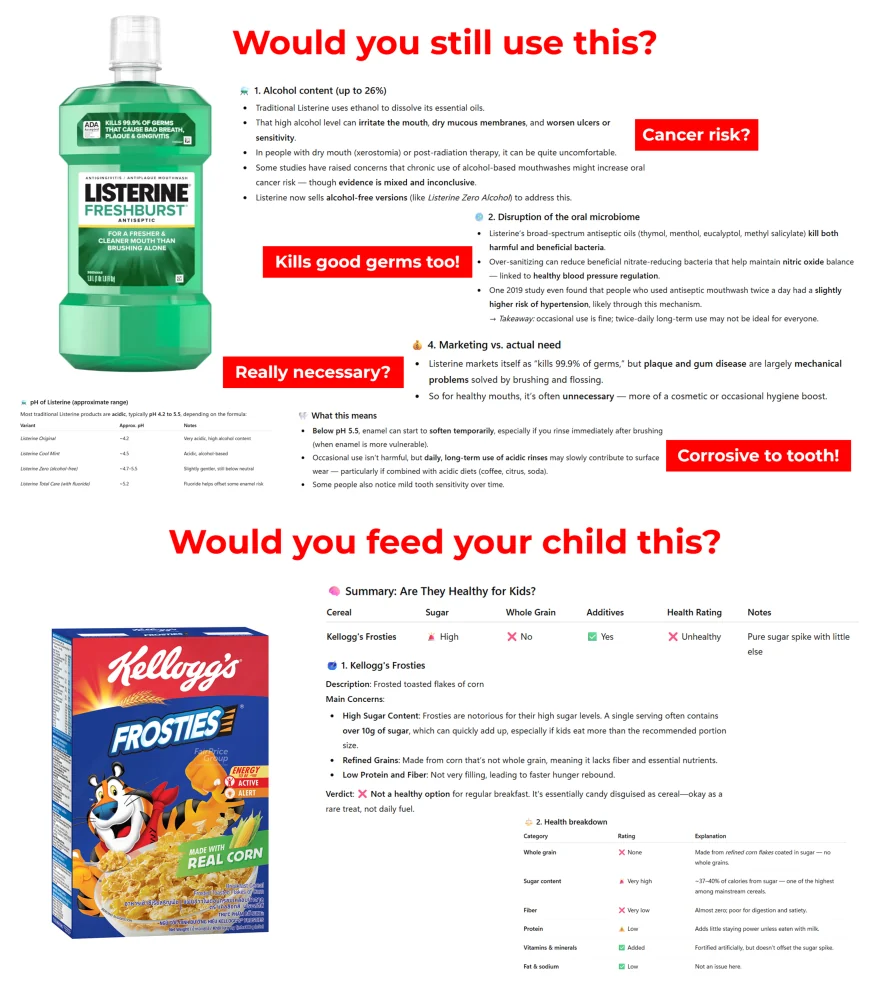
Why? Because I have become an intelligent consumer, not swayed anymore by flashy ads, strong brands, attractive packaging, convenient shelf placements, irresistible pricing, and deceptive labelling.
Not just me, but soon billions of consumers worldwide. Not just physical products but also intangible services and solutions.
All because of ChatGPT and Co, we have become ultra-smart buyers.
Health-washing, quality-washing, green-washing, ethical-washing, you name it, we will no longer be deceived.
Neither will sleek marketing, persuasive copy and suave branding work their magic as well as in the past.
With AI assistants, or better still, those that can decide and buy for us based on our budget, preferences and values, the power of branding, advertising and packaging will be severely eroded.
AI will change the products themselves
AI-assisted shopping is a huge disruption to consumer commerce, more potent than social media or Google searches ever were. No product or service, B2B or B2C, will be untouched.
In the next decade, it will change the economics, growth, profitability and features of even the longest standing products, such as Listerine (invented: 1895) and Frosties (1952).
Products can no longer be "-washed". Every offer will be swimming "naked". Every copy and claim will be scrutinized and verified.
Products will have to be innovated up to what smart consumers expect, or risk sudden fall from grace.
AI will not only transform the way we shop but change the products themselves.
AI-First World vs AI-Plus World
This is one of the implications of the AI-First World, which is a comprehensive reimagination of how the world will change with AI.
By contrast, the AI-Plus World is a simple and first order exploration of the future by extrapolating what we are familiar with today with AI.
As I elaborated in a previous issue, companies are likely to be killed not by what is obvious, but by what they cannot imagine.
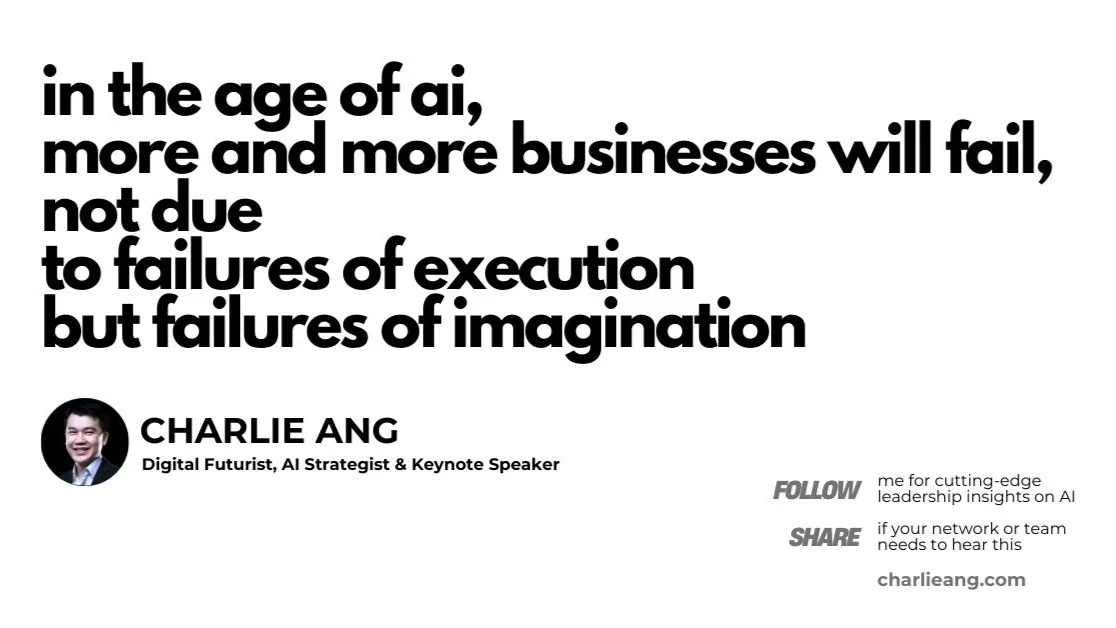
Most consumer facing companies are merely and mostly adding AI to their processes and channels, and NOT "upgrading" their products for smart buyers.
Why? Because they are:
- designing for an AI-Plus world, not an AI-First world.
- extrapolating the future based on the present, not reimagining the future from first principles.
- thinking traditionally and linearly, not disruptively and strategically.
Most certainly, they are not applying Systems Thinking, Future-Back Approach, Jobs-to-be-Done Mindset and First Principles Analysis, four of the Eight Core Skills Stack of Leadership in the AI Era.
Originally published in Charlie Ang's Intelligent Reinvention Memo newsletter on LinkedIn (Issue 32).

Charlie Ang is an Intelligent Reinvention Strategist, corporate futurist and AI keynote speaker based in Singapore and speaking worldwide. He helps organisations and leaders reinvent, rewire and retool for the Age of Intelligence, and has been featured by the BBC, Financial Times, National Geographic and CNA.